The Man Who Opted Out of Everything
By Wallace the Possum
I have lived long enough to know that most acts of resistance begin not with a trumpet but with a nuisance. Arthur Fitch’s began with a knee brace.
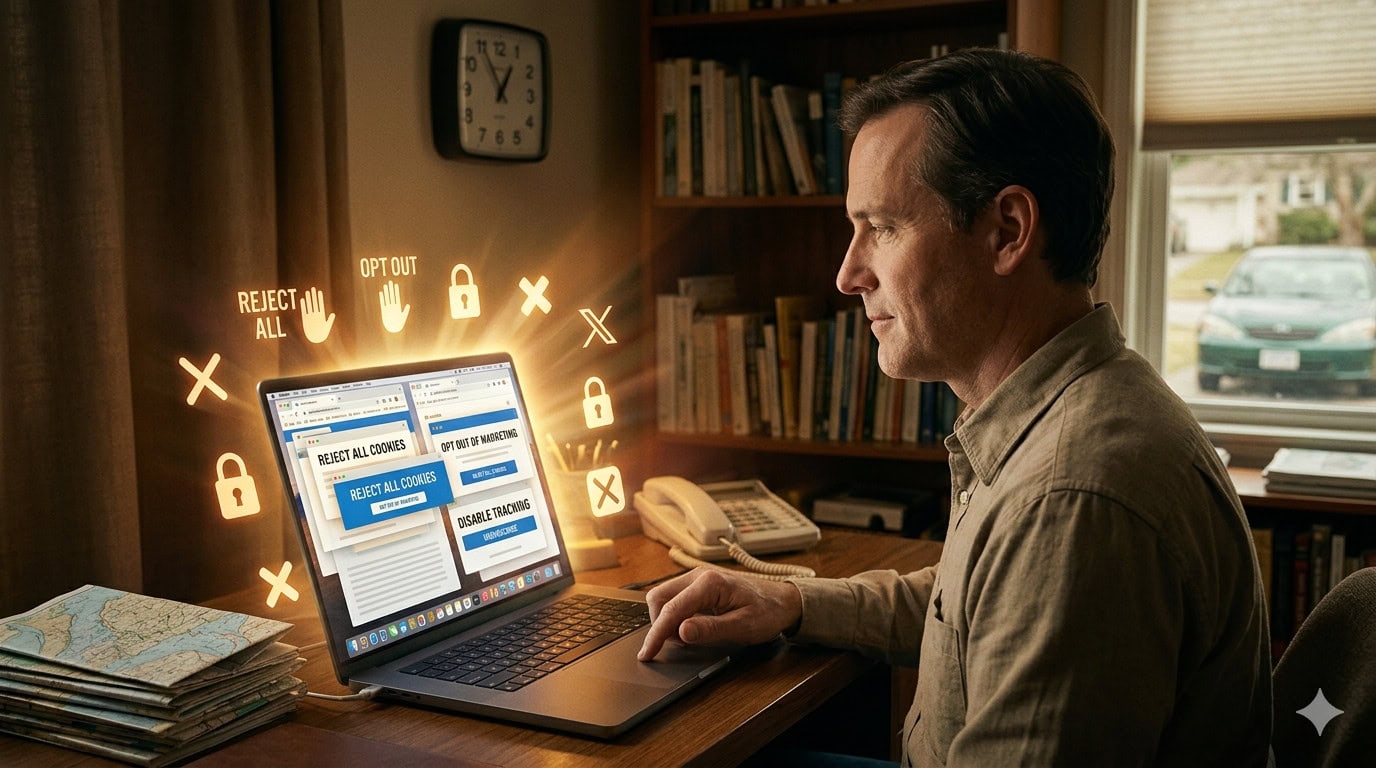
He had googled “mild knee discomfort” exactly once, four months prior, and the internet had neither forgotten nor forgiven him for it. Knee braces followed him everywhere after that — on news sites, on weather apps, on a recipe page for banana bread where they had absolutely no business appearing. That Tuesday morning in March, on a website listing local park hours, a banner materialized offering him fifteen percent off a compression sleeve.
Arthur put down his coffee. He looked at the banner. The banner, in some algorithmic sense, looked back.
He clicked Reject All.
I want to tell you about that feeling, because I think it matters. It was warm and spreading, like the first sip of something cold on a hot day — the brief, clean sensation of a man who has located, however momentarily, the edges of himself. He felt, for the first time in some years, like a person rather than a preference.
So he did it again. Then again.
By noon, Arthur had rejected cookies on forty-seven websites. He had opted out of marketing emails, location tracking, behavioral analytics, personalized content, and something called “cross-device identity stitching,” which sounded medical and faintly threatening. He unsubscribed from newsletters he didn’t remember subscribing to, including one from a travel company, one from a senator, and one that appeared to be entirely about decorative gourds.
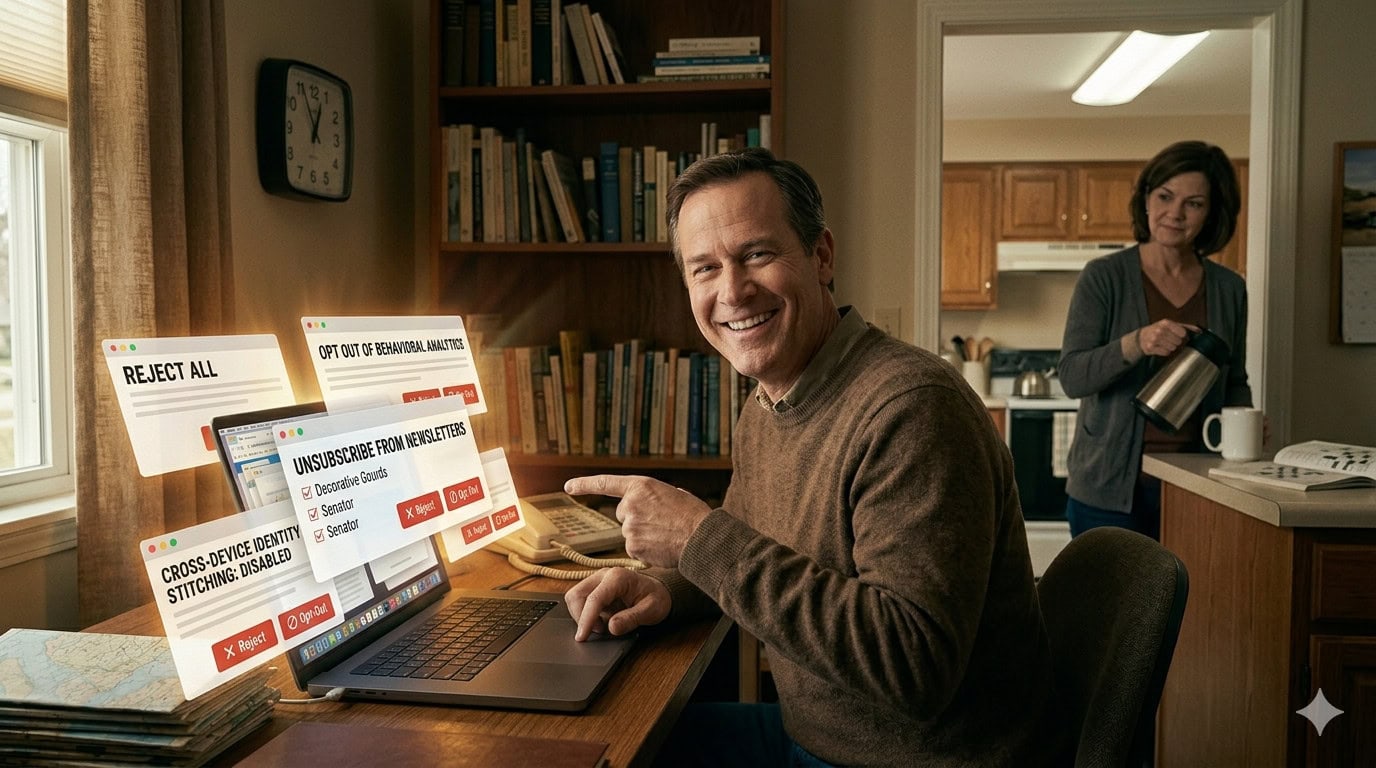 He felt magnificent.
His wife, Carol, watched him from the kitchen doorway with the expression of someone who has seen this sort of thing before, even if not precisely this sort of thing.
“You have a look,” she said.
“I am taking back my data sovereignty,” Arthur said.
Carol refilled her coffee and returned to her crossword. She was a patient woman. This is worth noting.
The consequences arrived quietly, as the consequences of principled stands usually do.
His Netflix home screen, deprived of its algorithmic intelligence, stared at him with the blank expression of a waiter who has forgotten your order and is hoping you won’t bring it up. Where curated rows of content had once lived, there was now a single, cheerless suggestion: Popular in Your Region. Arthur’s region, apparently, favored competition cooking shows and documentaries about cults. He watched three episodes of something called Chop or Flop before understanding that he was no longer choosing anything. He was simply receiving.
His bank sent a letter — well, an email — with the subject line: Action Required: Unusual Account Behavior. By opting out of behavioral tracking, Arthur had made himself statistically invisible. Without data to confirm his existence as a consumer, his account had been flagged as potentially fraudulent. A human being, the bank’s systems seemed to imply, would want to be tracked. Not wanting to be tracked was, in the algorithmic sense, suspicious.
His smart car — a birthday gift from Carol, who held strong opinions about fuel efficiency — declined to locate him in the cloud on Thursday morning. The car had known his routes, his preferred cabin temperature, his driving patterns. Without these, it fell into a kind of digital paralysis, unsure how to proceed. Arthur sat in the driveway for eleven minutes. He was late to work. He told his supervisor he’d had car trouble, which was accurate in the narrow sense.
At the grocery store, the self-checkout machine, encountering him without a loyalty card, produced a message he had never seen before: UNRECOGNIZED CUSTOMER. ESTIMATED SAVINGS: $0.00. A small light blinked. The machine seemed, if a machine can seem anything, disappointed.
He paid with cash. The cashier who came to assist him regarded the bills with the cautious curiosity of someone encountering a piece of folk art.
The Blanks who Opted Out
It was in the library — the last truly cookie-free zone, a fact Arthur found both comforting and faintly devastating — that he found The Blanks.
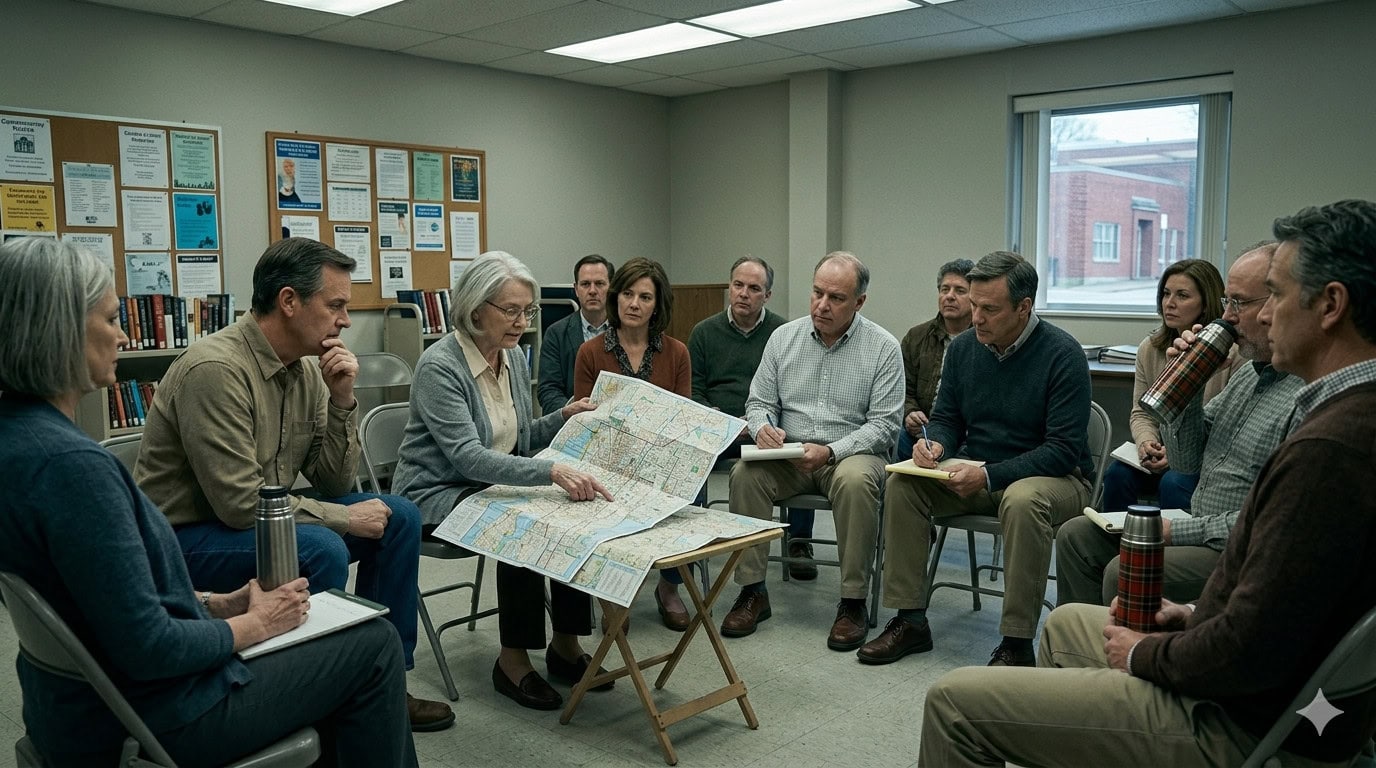
They were not difficult to identify. They paid for the printer in quarters. They wrote things on paper. One of them, a retired English teacher named Marguerite, was consulting a paper map. An actual, foldable paper map, in the current year, without a trace of irony.
“You have the look,” Marguerite told him, which was precisely what Carol had said, though the tone was entirely different. Carol had sounded like a woman preparing for inconvenience. Marguerite sounded like someone opening a door.
The Blanks, as they called themselves, were eleven people who had opted out so completely that the digital world had, in effect, stopped acknowledging them. There was Marguerite, two other retired teachers, a deeply skeptical accountant, and a dermatologist named Phil who would not explain, even when asked directly, the nature of his particular grievance. Some things, Phil seemed to feel, did not require explanation.
They met on Tuesdays. They drank coffee from a shared thermos. They discussed, in measured and unhurried tones, the slow erosion of the private self in a world organized around the capture and sale of attention. Arthur found them both inspiring and quietly alarming, the way one sometimes feels about people who have arrived, by a different road, at a destination you are not yet certain you want to reach.
“The yogurt,” Marguerite said, at his first meeting. “Does your refrigerator adjust the yogurt order automatically?”
Arthur looked at her. “Yes,” he said.
She nodded. She had known it would.
The terms-of-service agreement that would restore Arthur’s full digital citizenship ran to forty-seven pages. He read all of it. This was, his supervisor would later mention, something no one had ever done.
Page twelve revoked his right to complain about advertisements. Page nineteen granted use of his location data to unnamed third parties described only as “partners and associates,” a phrase that carried the faint energy of a warning. Page thirty-one — he read it three times to be sure — contained a clause granting the platform non-exclusive rights to “incidental data generated during sleep cycles,” which Arthur interpreted, after some reflection, as his dreams.
He thought about The Blanks. He thought about Marguerite’s paper map, unfolded and deliberate and stubbornly, beautifully analog.
Then he thought about his frozen bank account, his bewildered car, and the self-checkout machine blinking at him with what he could only describe as institutional pity.
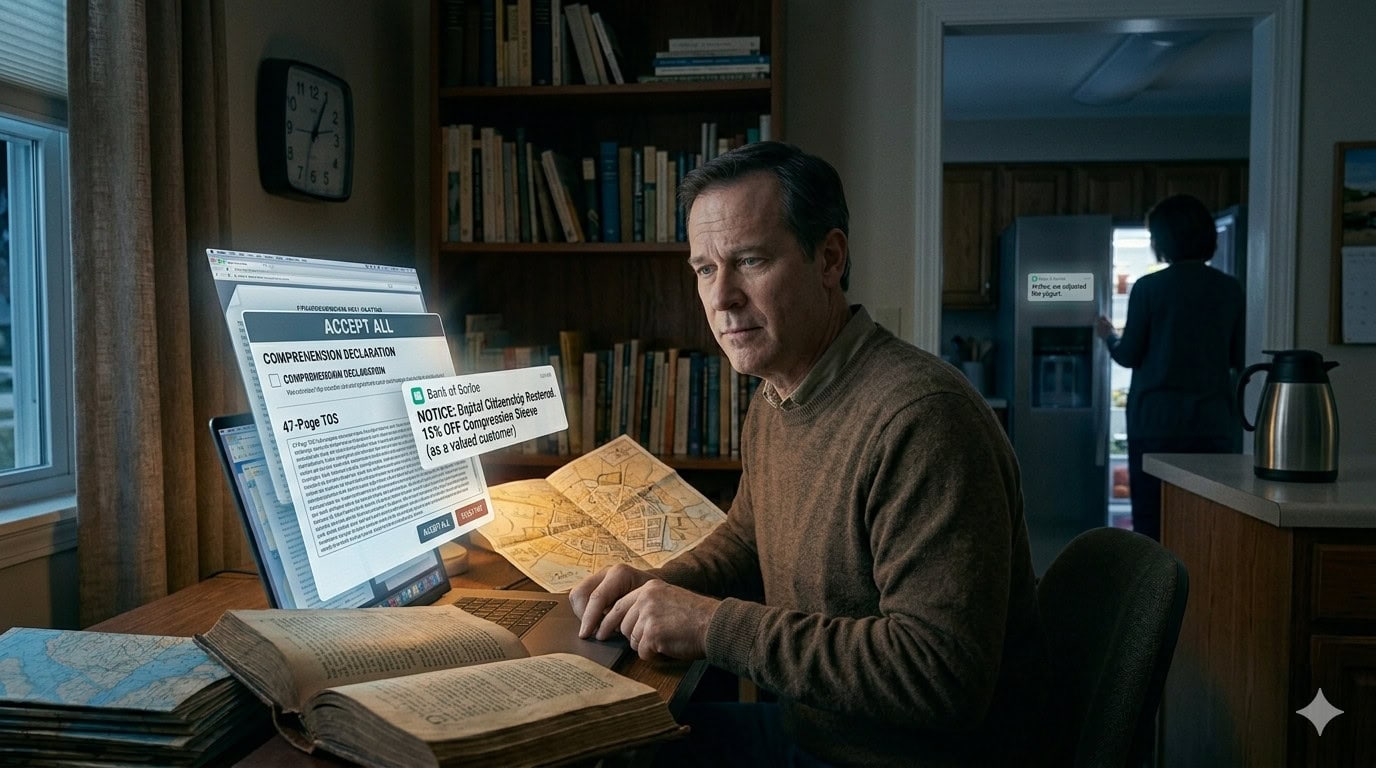 Arthur Fitch, who had never sent back a meal even when the occasion clearly called for it, clicked Accept All.
His car started immediately. His Netflix recognized him. His bank sent a notification that his account had been restored, and that, as a valued customer, he might appreciate fifteen percent off a compression sleeve.
He stood in front of the refrigerator for a long time without moving. The refrigerator, after a moment, sent a push notification to his phone: Welcome back, Arthur. We adjusted the yogurt.
That afternoon, Arthur bought a flip phone. He never used it to go online. He kept it in his jacket pocket always — small and plain and unconnected, a little rectangle of nothing that belonged to no one but him.
It was, he thought, enough.
For now.