The Sea Cucumber
By Maurice the Goat, Senior Swamp Correspondent
Maurice had thought he was done with all of it.
He had a cottage in the Everglades, a stack of unread submissions about the Great Algae Bloom of ’09, and a personal policy of not answering the door for anyone wearing kelp. Not a complicated life. By most measures, a good one.
Then the subpoena arrived.
It slid under the front door on a Tuesday — or possibly a Thursday; Maurice had stopped checking calendars around the incident with the peacocks. The envelope smelled of bleach and institutional disappointment. Inside: the FBI seal in silver ink and a photograph clipped to the corner.
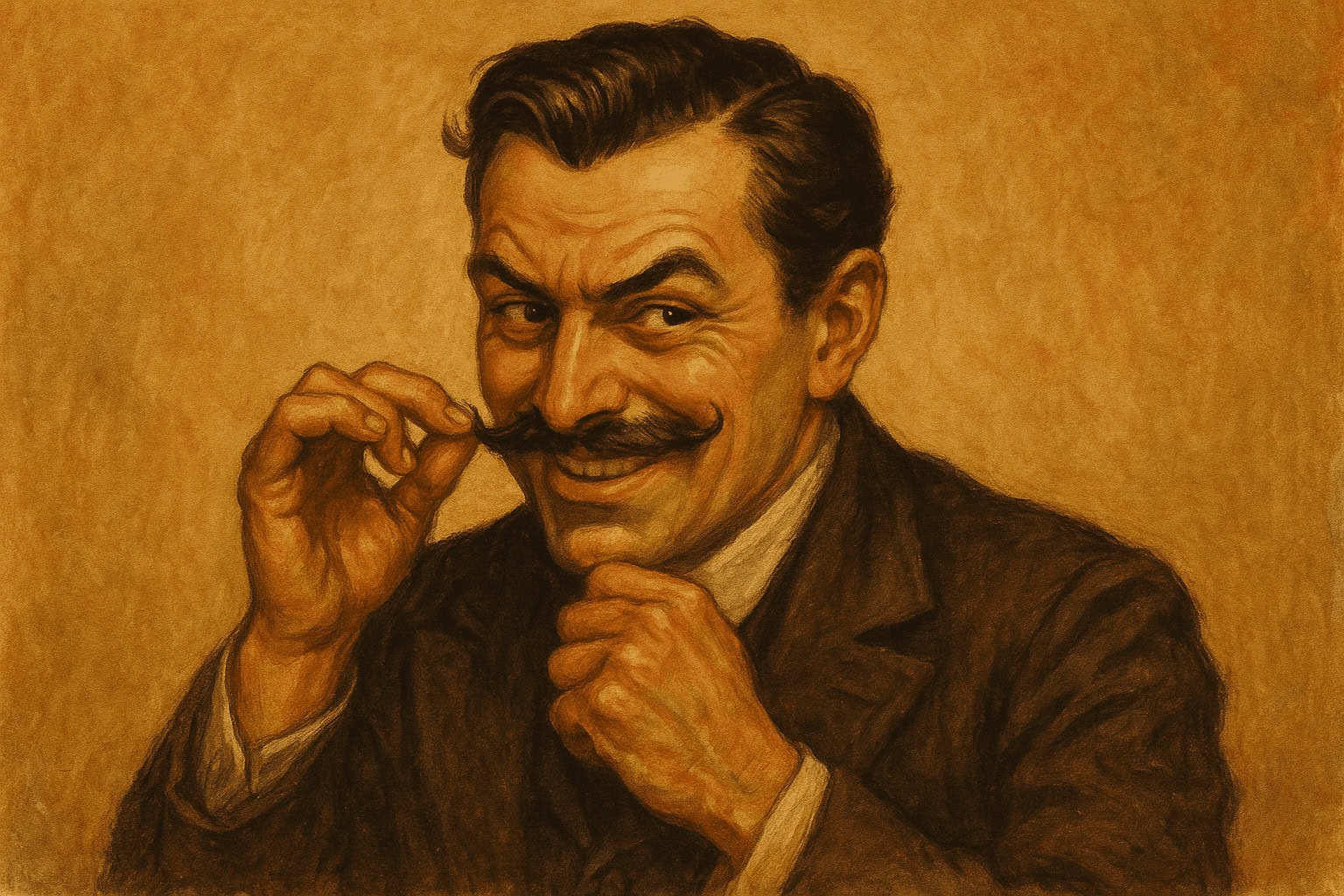
Gerald. New mustache. Unincarcerated.
Maurice set the photo down. His hooves were muddy from three days of gardening. His eyes said the rest.
“Right,” he said.
The Scribe Safari newsroom had changed while he was gone. The water cooler dispensed something faintly luminescent. A coral reef occupied the corner beneath a neon sign reading TALK SHOW. The receptionist was a heron in a headset, typing on a keyboard made of shells.
“Where’s Conchita?”
“Blimp,” the heron said without looking up. “Someone’s selling fake memories on the internet. Signal traced to the Mariana Trench.”
“And the Squid King?”
“Diplomatic custody. Centerpiece at a dinner for several whales and a nervous octopus ambassador from Peru.”
“Sounds stable.”
“It isn’t.”
Maurice poured himself a drink from the water cooler. It tasted like ambition and mild radiation. He poured another.
Gerald was waiting in a black SUV outside.
Not surprising. Gerald favored the theatrical entrance, and a black SUV in broad daylight outside a journalism office was, by Gerald’s standards, practically subtle. He was wearing sunglasses and cradling a tank in his lap — carry-on sized, filled with seawater, connected to the car’s oxygen system by a series of tubes.
At the bottom of the tank sat something brownish-gray and tubular, about the length of a man’s forearm, with the intellectual presentation of a used bath mat.
“You’re back,” Gerald said. 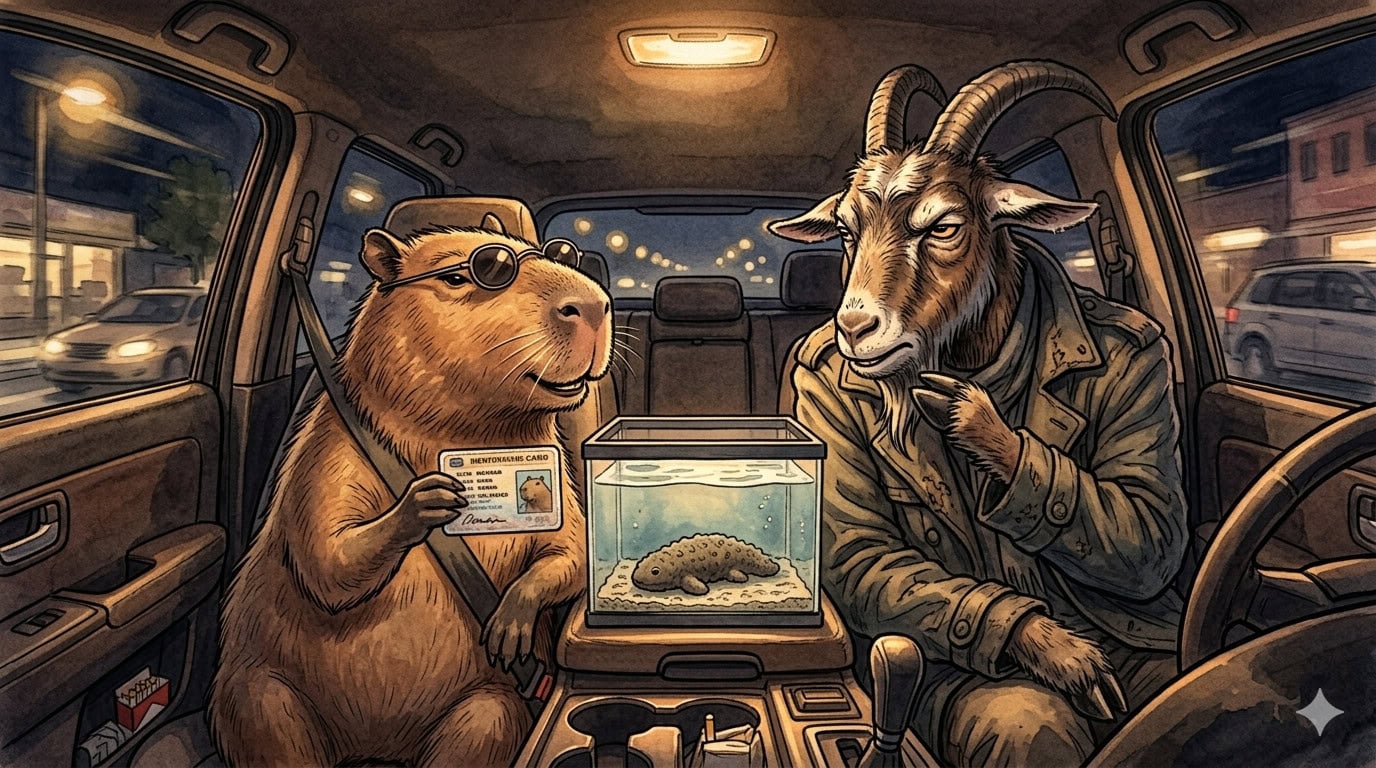
“You subpoenaed me. Different thing.”
“Details.” Gerald gestured at the tank. “Maurice, meet Namako.”
Maurice studied the tank. Namako did not study him back. He didn’t appear to have eyes. He appeared to have approximately nothing — no face, no expression, no reaction to being looked at. He sat on the floor of the tank with the serene vacancy of something that had never once needed to seem impressive.
“What is it?” Maurice asked.
“Sea cucumber. The Japanese call them namako.” Gerald’s voice dropped. “Low creatures. Bottom feeders. They eat the floor, Maurice. Forty years, down in the dark, eating sediment. You know what sinks to the bottom?”
Maurice said nothing.
“Everything,” Gerald said. “Everything people throw away. Everything they bury. Everything they think is gone.”
Namako pulsed. Once. Slowly.
“No brain,” Gerald continued. “No centralized nervous system. No eyes. What he has instead are chemical receptors across his entire body — he tastes the water, tastes the sediment, tastes everything that passes through him. For forty years.” Gerald removed his sunglasses. “He knows where the money went. He knows about Rotterdam. The three missing toucans. The attaché case in Düsseldorf.”
“He told you this.”
“He can’t talk.” Gerald reached into his jacket and produced a small laminated card. THE PEARLFISH TRANSLATES. “There’s a fish living inside him — it’s not important where. It talks. Namako reports.” Gerald put the card away. “We have an arrangement.”
Maurice looked at the tank. Something small and silver flickered near Namako’s posterior end. He decided not to think about it.
“Why are you showing me this?” Maurice asked.
Gerald’s expression changed. “Because he’s absorbed something new. Something he shouldn’t have.” He paused. “The concept of justice.”
Silence.
“We have,” Gerald said, “approximately forty-eight hours before he acts on it.”
The seagulls appeared over the SUV in tight formation — a dozen of them, GPS collars, aviator goggles.
“New team,” Gerald said. “Reconnaissance and light psychological warfare.”
A laminated briefing packet dropped through the sunroof. Photograph of a yacht. Floor plan of the Monaco crown jewel collection. A handwritten note: THE LOBSTER IS FRIENDLY NOW. DO NOT PROVOKE.
“You’re stealing the Monaco jewels,” Maurice said.
“Liberating. Cephalopod legal defense fund.”
Maurice looked at Namako, who had moved approximately three inches in the past ten minutes. “What does he contribute?”
Gerald reached into the glove compartment and held up another laminated card.
HOLOTHURIN. Derived from body wall tissue. Lethal to marine life at parts-per-million concentrations. Full paralysis of crustacean nervous system: ninety seconds.
“The vault,” Gerald said, “has a shark.”
Maurice read the card again.
“And when threatened,” Gerald continued, “he expels Cuvierian tubules from his — from his rear end. Sticky. Toxic. Can immobilize anything up to the size of a large tuna.” A pause. “Or a security guard.”
“And if he decides we’re a threat?”
Gerald did not answer.
Namako pulsed.
The mission went poorly in the ways missions always go poorly when a sea cucumber is involved.
Getting Namako through Monaco customs required a signed letter from a marine biologist in Marseille, two bribes, and a third bribe to the official who Googled sea cucumbers and came back wanting considerably more money.
Inside the vault, Conchita disabled two cameras and a pressure plate before the lobster emerged from the shadows — enormous, ancient, armored in a way that suggested prior military service. It was not, despite the briefing note, friendly.
It was Maurice who noticed Namako change first.
Until that moment he had done nothing. He’d sat in his tank with the placidity of something that had outlasted every civilization that had ever tried to impress it. He had watched Monaco with his non-eyes. He had tasted the fear in the water.
Then the lobster came for the tank.
Namako went rigid. Then liquid — his body softening, reshaping, sliding through a gap in the tank lid that nothing with bones could have managed. Then rigid again on the vault floor. Brown. Warty. Deeply unimpressive.
He turned toward the lobster.
What happened next Maurice would describe afterward to no one, because he didn’t want to talk about it.
The short version: Cuvierian tubules. Ninety seconds. The lobster was fine. Probably.
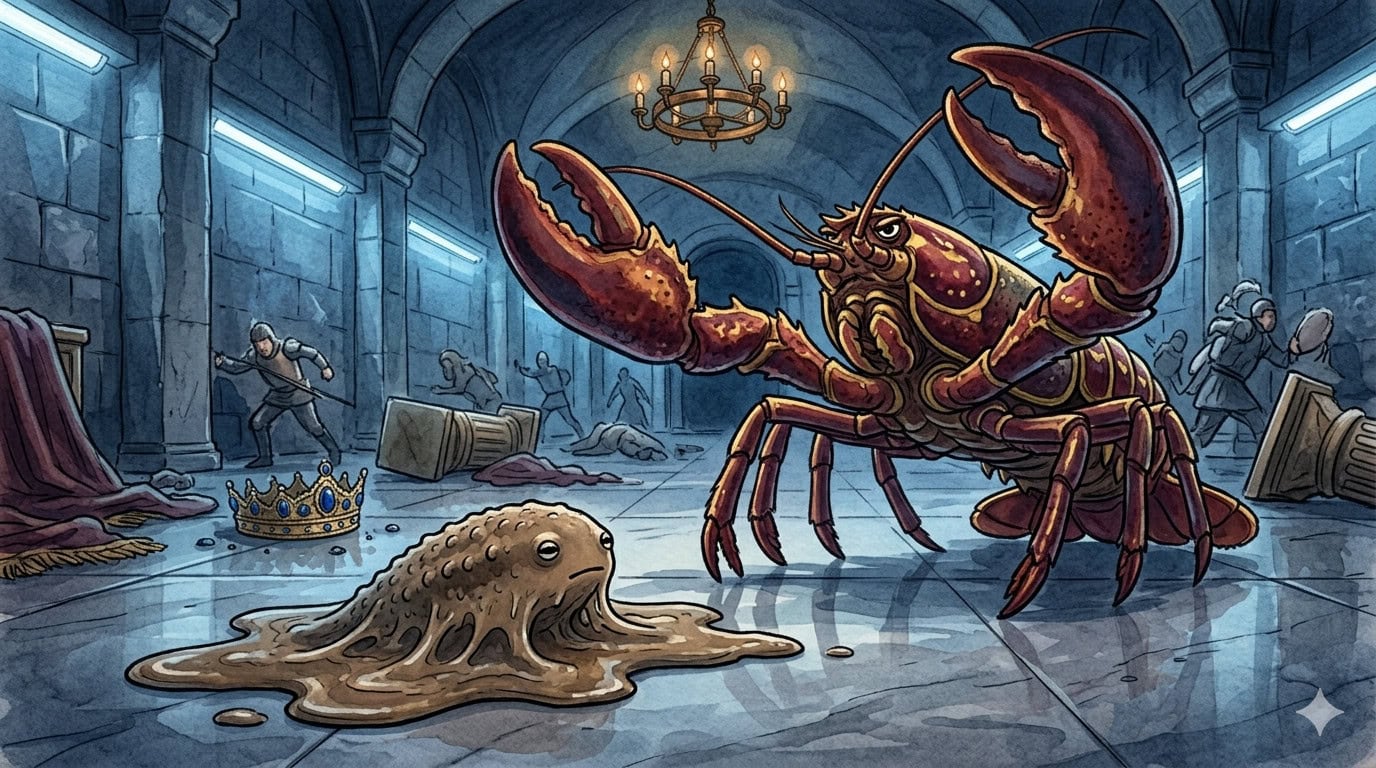 What stayed with Maurice was that Namako made no sound. No threat, no warning. Just the slow, certain movement of something that had spent forty years on the bottom of the ocean and knew — without a brain to know it with — exactly what the situation required.
The jewels were in the bag before the alarms went off. When they did, Conchita threw a tiara at a chandelier and Gerald attempted to jet ski through a lobby that did not accommodate jet skiing. Three seagulls ended up in the hotel pool wearing someone’s reading glasses. A peacock was involved. A Norwegian ambassador lodged a formal complaint about a wheel of cheese.
But they got out.
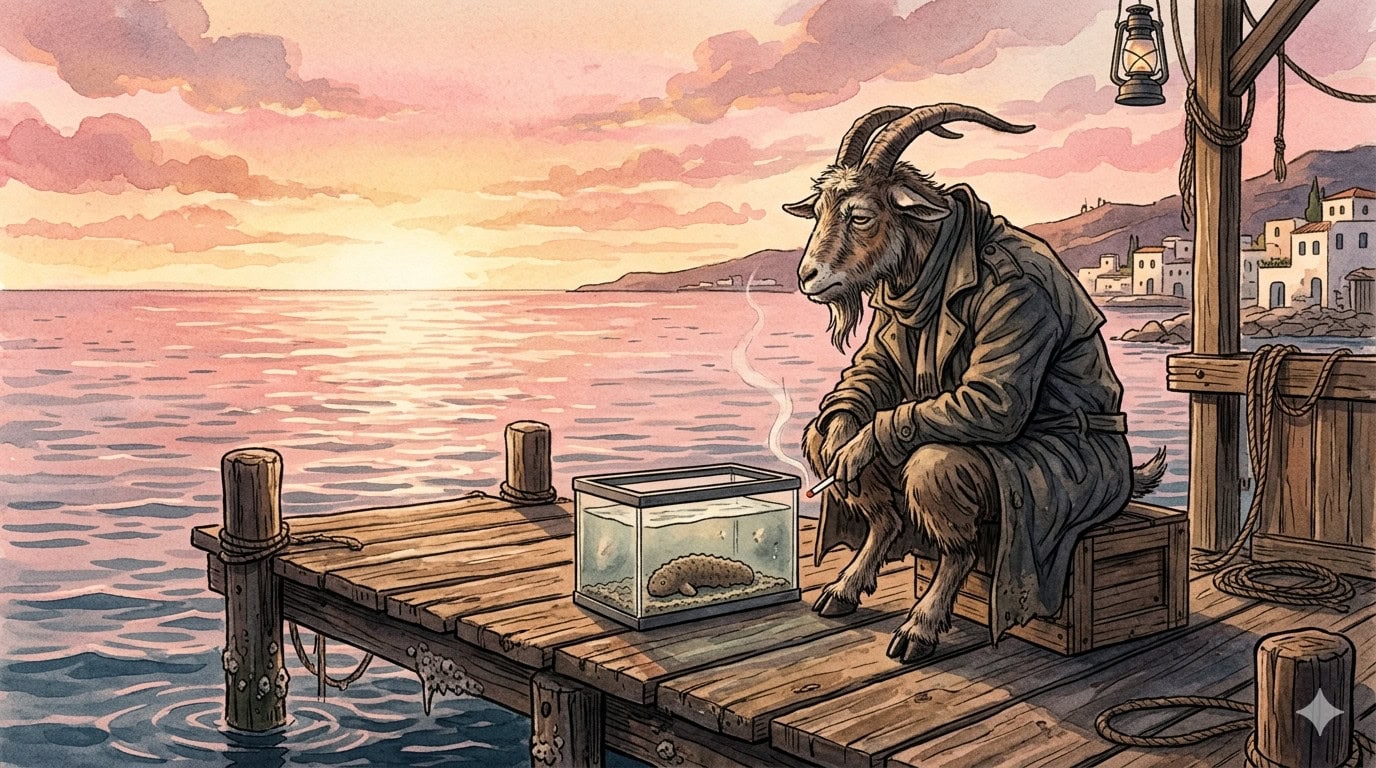
Afterward, on a dock in Nice as dawn came up pink over the water, Maurice sat with Namako’s tank between his hooves and said nothing for a long time.
“No brain,” he finally said. “No eyes. You eat the floor for a living.” He looked at the tank. “And you’re the most dangerous thing in this story.”
Namako sat on the floor of the tank. The pearlfish flickered somewhere near his rear end. Maurice kept his eyes up.
He lit a cigarette and watched the sun come up.
Gerald was eventually recaptured in Liechtenstein, attempting to register a capybara as a limited liability company. The Seagull Task Force disbanded after a jurisdictional dispute with Interpol. The Monaco jewels were returned. Mostly. The lobster declined to comment.
Namako was remanded to a marine research facility outside Marseille, where he spent his days on the tank floor, eating, absorbing, knowing.
Every few months the facility received an anonymous donation.
Always in cash. Always with a cocktail napkin bearing a single line in familiar handwriting:
HE REMEMBERS EVERYTHING.